
Choosing the best LED Harness manufacturer in China takes more than comparing prices or catalog photos. The connection must fit the lamp, vehicle, or sign precisely: wire gauge, connector locking force, insulation, and strain relief all matter. A harness that looks neat on a sample board may still fail after repeated vibration or heat exposure. Small details count.
The U.S. Department of Energy reports that residential LEDs use at least 75% less energy and last up to 25 times longer than incandescent lighting. That figure describes lamps, not harnesses, but it shows why dependable electrical connections matter in long-life lighting systems. Buyers should ask manufacturers for traceable material specifications, documented inspection procedures, sample test records, and clear controls for production changes. Request evidence, not just assurances.
One limitation deserves attention: without a supplied, verifiable source, attributing a quotation to a named LED Harness specialist would risk inventing an endorsement. A practical engineering principle is simple: “A reliable harness is proven by its connections, materials, and repeatable test results.” Use that standard when comparing Chinese suppliers. The strongest choice is not automatically the largest factory; it is the partner that can explain its process, provide relevant evidence, and consistently deliver assemblies that match the approved sample.
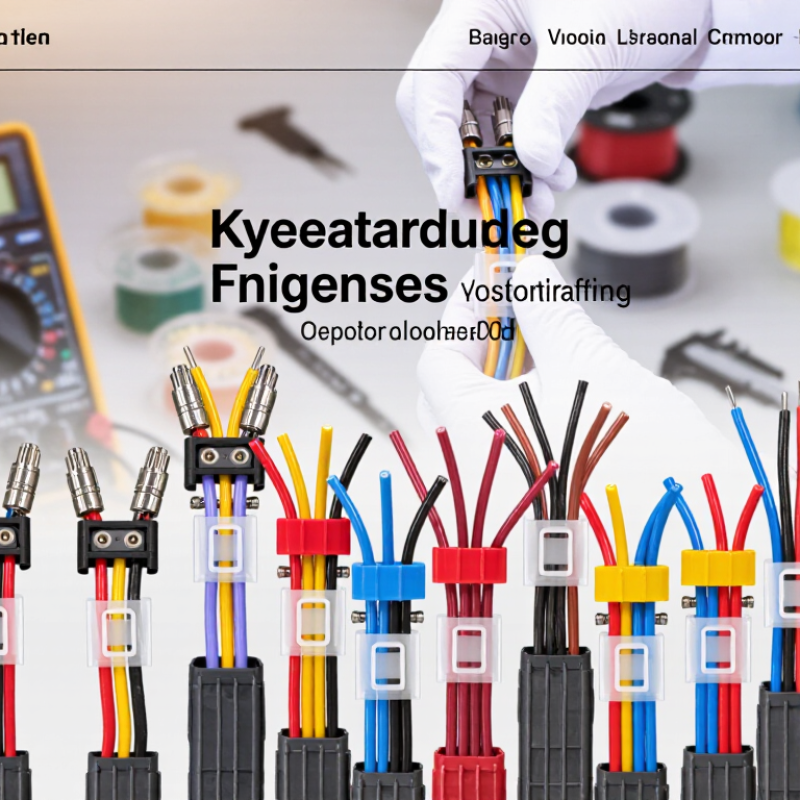
Choosing the best LED harness manufacturer in China starts with a clear electrical and environmental specification. State the system voltage, operating range, and maximum current for every circuit. A 24-volt lighting system may still experience voltage drops across long cables. Measure the cable length, load distance, and allowable brightness variation.
Current capacity needs practical calculation. Include continuous current, startup surge, and expected temperature rise. A harness carrying 8 amperes in open air may require thicker conductors inside a sealed enclosure. Copper size, insulation thickness, and bundling should match the real installation. Do not rely on a general catalog value.
The environment changes the design quickly. Describe water exposure, oil contact, vibration, dust, ultraviolet light, and temperatures below or above normal operation. Specify connector locking strength, sealing performance, terminal plating, and mating cycles. An outdoor harness may need sealed connectors, while an indoor cabinet may need only secure latches. Connector selection should also consider assembly space and service access.
A first specification is rarely perfect. We have seen projects where the connector fit correctly but blocked a mounting screw. Request drawings, sample harnesses, electrical test records, and material traceability from the manufacturer. Check crimp height, pull force, continuity, insulation resistance, and polarity labeling. Small sample tests reveal problems earlier. A reliable supplier should ask detailed questions, not simply accept an incomplete drawing. That questioning often shows real manufacturing experience.
Choosing the best LED harness manufacturer requires more than a clean sample. Compare its quality system with IPC/WHMA-A-620E, the 2022 revision of the workmanship standard. The standard defines three product classes, from general-purpose assemblies to high-performance applications where failure carries greater consequences. Ask suppliers to state the class used for your harness and show how inspection criteria match it. A bright LED can still hide a weak crimp beneath its heat-shrink sleeve.
Look for documented crimp-height checks, pull testing, polarity verification, and continuity testing. Request recent inspection records tied to wire gauges, terminals, and production lots—not a generic quality certificate. IPC/WHMA-A-620E provides acceptance criteria for cable and wire harness workmanship; it does not replace a buyer’s electrical or environmental requirements. That distinction matters. A harness may pass visual inspection yet fail after vibration or repeated bending if those risks were never tested.
Tips: Ask for a sample build record showing the crimp tool setting, measured crimp height, test result, and inspector sign-off. Compare the record with your drawing and agreed IPC class. If the supplier cannot explain a failed measurement and its corrective action, keep looking. Real factories make mistakes; reliable ones document and learn from them.
A reliable LED harness manufacturer should prove its wire documentation, not merely show product photos. UL 758 covers appliance wiring material, including construction, insulation, ratings, and marking details. During a factory audit, request the current UL file and confirm the listed AWM style. Check conductor size, insulation material, temperature rating, voltage rating, and flame performance. Small mismatches matter.
Small mismatches matter.
Inspect the cable spool in person when possible. Compare its printed markings with the approved documentation. The wording, spacing, and AWM designation should align. Review material certificates, production batch records, and test reports. A qualified compliance engineer should also verify whether the harness design matches the documented wire construction. An independent laboratory review adds useful confidence.
Paperwork can still fail.
One overlooked revision date may invalidate an otherwise convincing file. I have seen checklists focus on electrical ratings while missing jacket color changes or an unapproved supplier substitution. That weakness deserves attention. Ask how the manufacturer controls engineering changes, keeps samples, and links each harness batch to its wire records. Reliable suppliers explain these steps clearly and provide traceable evidence. The best choice is not always the factory with the lowest quote. It is the one whose documentation remains accurate when the details become uncomfortable.
Who Is the Best LED Harness Manufacturer in China?
A credible LED harness supplier must prove sealing performance, not simply print “IP67.” Under IEC 60529, IP67 means dust-tight protection and temporary immersion up to one meter for 30 minutes. The test applies to the tested assembly, including connectors, seals, cable entries, and plugs. It does not prove resistance to pressure washing, vibration, salt spray, or repeated thermal cycling.
In practical harness audits, I check whether the sample was tested in its actual mated condition. I also inspect seal compression, jacket damage, and water traces around terminals. A supplier should provide the test date, sample configuration, laboratory identification, and complete test report. The Global EV Outlook 2024 reports more than 14 million electric cars were sold worldwide in 2023. That growth increases demand for dependable low-voltage wiring in exposed areas. Yet a market trend cannot replace evidence. One mistake remains common: treating an IP rating as permanent protection.
Tips: Ask for IEC 60529 results from the finished harness. Confirm the cable length, connector pairing, and sealing plugs. Request pre- and post-test insulation checks. IP67 is useful, but it is only one checkpoint. A careful buyer should still question unclear documents. Real production is messier than a clean laboratory sample.
| Assessment Dimension | Relevant Standard or Fact | Evidence to Request | How to Assess the Claim |
|---|---|---|---|
| IP67 dust protection | Under IEC 60529, the first numeral, 6, denotes dust-tight protection for the tested enclosure. | Test report identifying the tested product configuration, applicable standard, laboratory, test date, and result. | Confirm the report covers the actual harness assembly and its relevant connectors, seals, and cable-entry points—not merely a similar component. |
| IP67 water protection | The second numeral, 7, denotes protection against the effects of temporary immersion under the test conditions specified for IPX7. The commonly stated test is immersion at a depth of 1 meter for 30 minutes. | Test records stating immersion depth, duration, sample condition, and post-test inspection or acceptance criteria. | Check that the immersion test was performed on the complete, representative assembly in the intended operating configuration. |
| Connector mating condition | Ingress protection can depend on whether connectors are mated, capped, or left open. | Drawings or test documentation specifying connector mating status and any required protective caps or accessories. | Match the tested condition to the installation and use conditions. Do not assume an unmated connector retains the same rating as a mated assembly. |
| Cable entries and joints | Seals, overmolds, splices, glands, and enclosure interfaces can affect the ingress protection of the complete assembly. | Assembly drawings, sealing details, process controls, and test evidence for the relevant joints and interfaces. | Verify that the tested sample includes the same cable diameters, seals, joints, and manufacturing method as the production harness. |
| Test-report traceability | A rating should be supported by test evidence tied to an identifiable sample and configuration. | Report number, sample identification, test laboratory details, photographs or drawings, and revision information. | Compare the report’s product details with the quotation, technical drawing, bill of materials, and supplied product revision. |
| Production consistency | A test result applies to the tested sample and configuration; it does not by itself establish that every production unit has been tested. | Incoming-material controls, sealing-process instructions, inspection records, and change-control procedures. | Ask how production is controlled and whether changes to connectors, seals, materials, tooling, or assembly processes trigger review or retesting. |
| Application suitability | IP67 describes dust and temporary-immersion protection under specified test conditions; it does not establish suitability for every exposure or operating environment. | Application-specific validation plan covering installation, temperature, chemicals, vibration, pressure, and expected water exposure where relevant. | Assess the full service environment. Do not treat an IP67 result as proof of resistance to prolonged submersion, high-pressure water jets, or unrelated environmental stresses. |
Selection note: Compare manufacturers using configuration-specific test evidence, traceability, production controls, and application fit. An IP67 claim should not be treated as verified unless the supporting documentation matches the harness assembly being purchased.
Who is the best LED harness manufacturer in China? The answer depends on evidence, not a polished factory tour. Rank suppliers across four checks: traceability, test coverage, lead time, and total cost. Ask for a sample lot record linking wire, terminals, and connector batches to a finished harness. Then request test records for continuity, insulation resistance, and pull strength, where applicable. IPC/WHMA-A-620 provides widely used workmanship criteria for cable and wire-harness assemblies; ask which revision and acceptance class the supplier follows. A certificate alone is not a traceability system. Small detail, big difference.
For delivery context, the World Bank’s 2023 Logistics Performance Index placed China 19th among 139 economies overall. That national result can inform shipping-risk discussions, but it cannot predict one factory’s lead time. Compare quoted production days with recent on-time delivery records and sample-to-production consistency. For cost, include tooling, inspection, packaging, freight, defect handling, and the cost of minimum order quantities—not just the unit price. Request actual defect and rework figures for comparable orders, with dates and lot sizes. If a supplier will not share them, mark the score as unverified, not zero. I would also leave room for judgment: an audit snapshot can miss a rushed shift or a newly changed process.
By continuing to browse or by clicking “Accept All Cookies,” you agree to the storing of first- and third-party cookies on your device to enhance site navigation, analyze site usage, and assist in our marketing efforts. View our Privacy and Cookie Policy.