How to Find Top Ball Valve Manufacturers in China?

Finding top ball valve manufacturers in China requires more than comparing prices or browsing online catalogs. The global ball valve market continues to expand, although published estimates differ. Grand View Research valued the market at approximately USD 12 billion in 2023 and projected steady growth through 2030. Fortune Business Insights reported a similar market direction, supported by energy, water treatment, chemical processing, and industrial automation. These figures reveal strong demand, but they do not identify reliable suppliers.

The real evaluation starts inside the factory. Check machining accuracy, material traceability, pressure-testing records, and production consistency. Ask whether the manufacturer can provide API 6D, ISO 5208, API 607, or ASME B16.34 compliance where applicable. ISO 9001 certification is useful, but certification alone proves little without current audit evidence and documented corrective actions. Request sample test reports. Review valve bodies, seats, stems, and actuator assemblies in detail. A serious supplier should explain why it selected stainless steel, carbon steel, PTFE, or other materials for your service conditions.

Supplier experience matters. So does technical communication. One overlooked detail can cause leakage, delayed installation, or costly replacement. Check export history, independent inspection options, warranty terms, and spare-parts support. Industry reports describe market growth, not factory reliability. That distinction matters. I have seen polished catalogs hide weak process control, so buyer judgment must remain active. The best Chinese manufacturers combine engineering capability, transparent documentation, stable quality systems, and practical after-sales support. A lower quotation may look attractive. It may also signal thinner testing, weaker materials, or unclear accountability. Verify before trusting.

How to Find Top Ball Valve Manufacturers in China?

Define Ball Valve Types, Sizes, Pressure Classes, and Key Standards

How to Find Top Ball Valve Manufacturers in China?

Ball valve selection starts with service conditions, not a supplier’s catalogue. Floating valves suit many small and medium lines. Trunnion-mounted valves handle larger sizes and higher operating forces. Choose full-bore designs for pigging or low pressure loss. Reduced-bore valves may lower cost and weight.

Consider one-piece, two-piece, three-piece, top-entry, soft-seat, or metal-seat construction.

Your specification should state NPS or DN, face-to-face length, body material, trim, temperature, and pressure class.

Classes 150, 300, and 600 are common. PN16 and PN40 appear widely in metric projects.

According to Grand View Research’s 2024 industrial valves analysis, the global market reached about USD 78 billion in 2023. This growth increases supplier options, but also increases comparison risk.

Ask manufacturers to match API 6D, ISO 17292, ASME B16.34, or EN 12516 requirements. Use ISO 5208 or API 598 for pressure-test expectations. For sour service, review NACE MR0175/ISO 15156 compliance.

Request heat numbers, material certificates, test records, coating details, and calibration evidence.

A polished brochure is not proof. Factory capability can still vary.

Tips:

Send a line list and pressure-temperature table before requesting prices. Check whether the proposed valve fits your flange standard. Inspect sample markings and packing glands. Witness testing when the application is critical. One overlooked detail matters: “stainless steel” may describe the body, not every wetted part. Recheck the datasheet. It is easy to miss.

Screen Chinese Manufacturers by API 6D, ISO 5208, and ASME B16.34 Compliance

How to Find Top Ball Valve Manufacturers in China?

Screening Chinese ball valve manufacturers should begin with documented compliance, not polished websites or low quotations. Ask whether the factory holds a valid API 6D certificate for the exact valve range and production site. Check the certificate scope, expiration date, size range, pressure class, and approved manufacturing address. A certificate covering another facility is not enough.

ISO 5208 helps evaluate pressure testing and leakage performance. Request recent test records for hydrostatic shell tests, seat tests, and applicable leakage rates. Confirm the test medium, pressure, duration, and calibrated equipment. ASME B16.34 should support the valve’s pressure-temperature ratings, materials, wall thickness, and end connections. Compare these details with drawings and datasheets. Small differences matter.

Visit the factory if possible. Watch how operators mark heat numbers on bodies, stems, and covers. Review material certificates, welding procedures, inspection plans, and calibration records. Ask for a sample manufacturing traceability file. The answer should be clear, dated, and consistent. Some suppliers provide impressive documents but weak process control. That is a warning.

Do not rely on certificates alone. Witness a production test. Check whether the inspected valve matches the approved design. Review nonconformance handling, corrective actions, and final packing protection. A careful buyer may still miss something. Recheck assumptions before signing.

Verify Factory Capacity Through DN15–DN1200 Range and Class 150–2500 Ratings

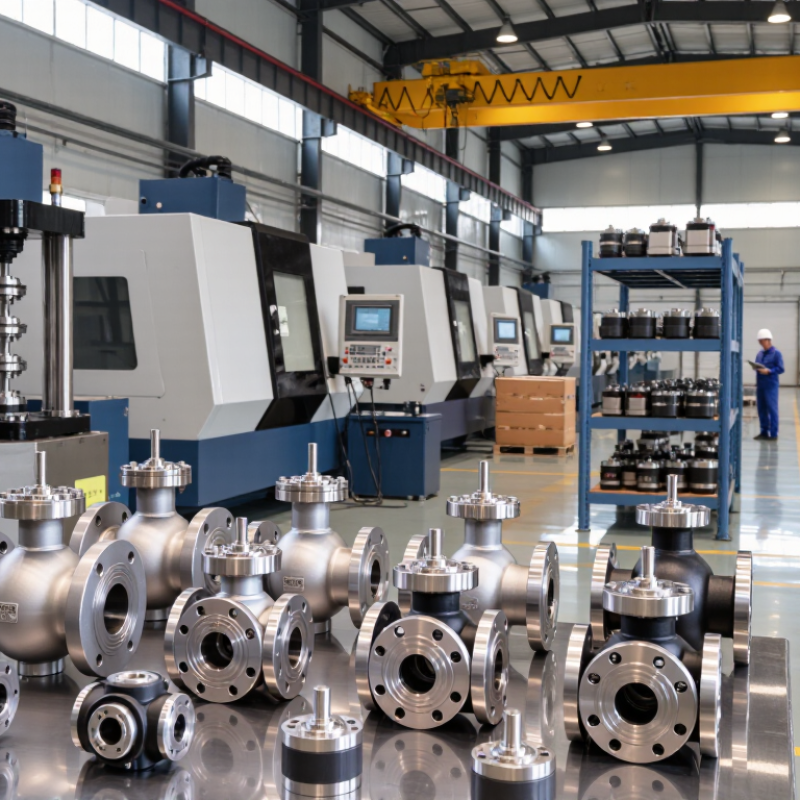
Finding top ball valve manufacturers in China requires more than comparing prices or viewing polished factory photos. Verify whether the facility can produce the full DN15–DN1200 range. This range shows whether the manufacturer handles small instrument valves and large pipeline equipment. Ask for recent production records, not only a product catalogue. Real capacity leaves evidence.

Pressure ratings deserve equal attention. A reliable factory should demonstrate Class 150–2500 manufacturing experience with pressure-test reports and inspection records. Request examples of shell tests, seat tests, and high-pressure testing. Check whether testing equipment matches the required standards and valve sizes. For large valves, inspect lifting systems, machining areas, welding controls, and storage conditions. These details reveal practical capability.

I have found that material traceability often separates experienced suppliers from simple assemblers. Review heat numbers, material certificates, dimensional reports, and final inspection files. Ask how the factory manages castings, forgings, sealing materials, and spare parts. The answer should be specific. Vague promises are not evidence.

A factory audit should include production planning and nonconformance procedures. Ask to see how rejected parts are isolated and corrected. This step is easy to underestimate. A clean workshop does not always mean consistent quality. I would also compare test records against actual valve markings, because paperwork can contain mistakes. That small inconsistency may deserve a deeper review before approving a supplier for critical DN15–DN1200 and Class 150–2500 projects.

How to Find Top Ball Valve Manufacturers in China? - Verify Factory Capacity Through DN15–DN1200 Range and Class 150–2500 Ratings
Verification Dimension Required Range or Standard Factory Capability Indicators Documents and Evidence to Request Acceptance Considerations
Nominal Size Coverage DN15–DN1200 Demonstrated manufacturing capability from small-bore valves through large-diameter valves, including body casting, machining, assembly, and testing. Product drawings, equipment list, production photographs, dimensional inspection reports, and serial-numbered valve records. Confirm that the stated range is produced in-house or clearly identify any qualified subcontracted process.
Small-Bore Ball Valves DN15–DN50 Suitable equipment for precision machining, threaded or flanged end connections, stem assembly, seat installation, and low-volume testing. Sample drawings, machining tolerance records, pressure-test reports, and material certificates for body, ball, stem, and seats. Verify connection type, bore configuration, pressure class, and operating temperature for each model.
Medium-Diameter Ball Valves DN65–DN300 Machining centers, dedicated assembly fixtures, lifting capability, and test benches suitable for larger bodies and heavier components. Capacity schedule, equipment specifications, production records, inspection plans, and hydrostatic and seat-test reports. Check whether the factory can maintain concentricity, torque control, and seat performance throughout the size range.
Large-Diameter Ball Valves DN350–DN600 Large-component handling systems, heavy-duty machining, controlled welding or casting processes, and high-capacity pressure-test equipment. Workshop layout, crane or lifting-capacity records, large-valve inspection reports, NDE records, and test-bench calibration certificates. Confirm the maximum test volume, test pressure, flange size, valve weight, and available lifting capacity.
Extra-Large Ball Valves DN700–DN1200 Specialized large-valve manufacturing, machining, assembly, handling, coating, and pressure-testing capability. Recent project references without confidential customer details, dimensional drawings, factory acceptance test records, and facility photographs. Do not rely only on a catalog statement; verify a completed valve or an auditable production record in the requested size.
Pressure Class Capability Class 150, 300, 600, 900, 1500, and 2500 Design and testing capability for ASME pressure classes commonly specified for industrial and process ball valves. Pressure-temperature rating tables, design calculations, body-wall measurements, pressure-test procedures, and calibrated gauge records. Pressure ratings depend on body material and temperature; verify the rating table for the exact material and service condition.
Design Standard API 6D / ISO 14313 for pipeline valves; API 608 and ASME B16.34 for applicable industrial ball valves Documented design-control procedures, controlled drawings, design review, and production models linked to the specified standard. Design standard declaration, technical data sheet, drawing revision history, and compliance checklist. Confirm that the selected standard matches the application, valve type, size, pressure class, and end connection.
Face-to-Face Dimensions ASME B16.10 or the dimensional standard stated in the purchase specification Controlled dimensional drawings and inspection tools for short-pattern, long-pattern, and custom face-to-face dimensions. Approved outline drawing, dimensional inspection report, and calibration certificates for measuring instruments. Face-to-face dimensions must be checked together with bore size, end connection, pressure class, and actuator clearance.
Flanged End Connections ASME B16.5 and, where applicable, ASME B16.47; other flange standards by specification Capability to machine flange faces, bolt holes, sealing surfaces, and alignment features within the specified tolerances. Flange drawings, drilling templates, dimensional reports, surface-finish records, and material certificates. Verify nominal size, pressure class, flange facing, bolt-hole pattern, bore transition, and applicable regional standard.
Pressure Testing API 598 and/or ISO 5208 Dedicated body, closure, and seat-test procedures with calibrated pressure gauges and traceable test records. Pressure-test procedure, test chart, gauge calibration certificate, valve serial number, test medium, duration, and result. Acceptance criteria must be stated in the applicable standard or purchase specification; test results should be traceable to each valve.
Fire-Safe Design API 607 and/or ISO 10497, when fire-safe service is required Fire-safe construction features such as secondary stem sealing, anti-static design, and controlled soft-seat or metal-seat configuration. Fire-safe test certificate, design drawing, material list, and confirmation of the tested valve configuration. Ensure that the certificate covers the same valve design, size range, pressure class, seat material, and stem arrangement.
Body and Trim Materials Common examples include ASTM A216 WCB, ASTM A351 CF8M, forged stainless steel, and nickel-alloy trim where specified Controlled material purchasing, heat-number traceability, positive material identification, and qualified machining or casting processes. Material test certificates, heat-treatment records, positive material identification reports, and chemical-mechanical test results. Material selection must be based on pressure, temperature, corrosion, fluid compatibility, and applicable design-code requirements.
Non-Destructive Examination Visual inspection, liquid penetrant testing, magnetic-particle testing, ultrasonic testing, and radiographic testing as specified Qualified inspectors, written NDE procedures, suitable equipment, and controlled acceptance criteria. NDE procedures, personnel qualification records, inspection reports, weld maps, radiographs or digital records, and calibration certificates. Inspection extent and acceptance level should be defined by the applicable standard, purchase order, and service risk.
Welding and Repair Control ASME Section IX or ISO 15614-1, when welding is part of the valve construction or repair process Qualified welding procedures, approved welders, controlled consumables, preheating or heat-treatment records where required. WPS, PQR, welder qualification records, weld-repair procedure, consumable certificates, and post-weld inspection reports. Any casting or weld repair should be documented, inspected, and traceable to the affected component.
Stem and Anti-Static Features Applicable to the selected valve design and service specification Blowout-resistant stem construction, anti-static continuity, controlled stem-to-ball engagement, and repeatable operating torque. Assembly drawing, anti-static test record, stem-retention inspection, torque test report, and functional-cycle record. Verify design suitability for manual, pneumatic, electric, or hydraulic actuation and for the specified operating frequency.
Seat and Seal Configuration Soft seat, fire-safe soft seat, metal seat, or special alloy seat according to service Controlled seat-material storage, dimensional inspection, surface-finish control, and documented assembly procedures. Seat and seal material certificates, compatibility statement, leakage-test records, and assembly inspection checklist. Confirm temperature range, fluid compatibility, fugitive-emission requirements, pressure differential, and required leakage class.
Actuator and Gearbox Integration Manual, pneumatic, electric, or hydraulic actuation as required Actuator-sizing calculations, ISO 5211 mounting compatibility where applicable, torque verification, and functional testing. Torque calculation, actuator data sheet, mounting drawing, open-close test report, and accessory list. Actuator selection should include breakaway torque, running torque, safety factor, fail position, cycle frequency, and site conditions.
Quality Management System ISO 9001 or an equivalent documented quality-management system Controlled purchasing, incoming inspection, process inspection, final inspection, nonconformance control, and corrective-action procedures. Valid certificate, quality manual extract, inspection and test plan, internal audit record, and sample nonconformance report. Check certificate scope, issuing body, validity, manufacturing site, and consistency with the actual factory location.
Material Traceability Full traceability from raw material to finished valve Heat numbers, component identification, batch records, machining records, assembly records, and final serial-number control. EN 10204 Type 3.1 material certificates, traceability matrix, marking photographs, and final dossier index. Traceability should remain legible and consistent across the body, ball, stem, pressure boundary parts, and documentation.
Factory Acceptance Testing Inspection and testing plan agreed before production Defined hold points, witness points, inspection frequency, test equipment control, and release authorization. Approved ITP, inspection reports, pressure-test records, dimensional reports, coating records, and final release note. Use serial-numbered records and verify that the tested configuration matches the ordered size, class, materials, and accessories.
Coating and Preservation Coating system, dry-film thickness, surface preparation, and preservation according to project specification Controlled blasting or surface-preparation process, coating inspection, curing control, end protection, and export packing procedures. Coating data sheet, surface-preparation report, dry-film thickness readings, visual inspection report, and packing list. Confirm coating compatibility with operating environment, storage period, transport method, and installation conditions.
Production Capacity Evidence Capacity must be demonstrated for the requested size and class combination Available machining hours, assembly stations, pressure-test capacity, qualified personnel, subcontractor controls, and realistic lead-time planning. Monthly production plan, anonymized order history, equipment register, staffing overview, capacity calculation, and current production schedule. Compare claimed capacity with equipment limits, test-bench capability, workforce, inspection resources, and delivery commitments.

Compare Materials, Testing, Certifications, MOQ, Lead Times, and Export Data

Finding top ball valve manufacturers in China requires more than comparing quotations. Check the body, ball, stem, and seat materials separately. Stainless steel suits corrosive service, while carbon steel often reduces cost. Ask for heat numbers and material certificates. According to Grand View Research, the global industrial valve market reached about USD 78 billion in 2023, increasing supplier competition and quality differences.

Testing evidence matters. Request pressure-test records based on ISO 5208, and verify fugitive-emission testing under ISO 15848 when leakage control is critical. For pipeline projects, API 6D compliance may be necessary. Certifications should match the actual factory, not only the trading company. TÜV Rheinland’s 2024 industrial quality research highlights traceability and documented inspections as major procurement controls. Small detail. It can prevent costly disputes.

Compare MOQ, lead times, and export performance in one table. A factory may quote 100 pieces, but custom alloys can raise the MOQ sharply. Standard valves may ship in 25–40 days; engineered designs often need 60–90 days. Check export data through UN Comtrade HS 8481 records, then compare destination markets and shipment consistency. China remains a major exporter in this category. However, customs data groups many valve types together, so conclusions can be imperfect. I would also request three recent bills of lading, third-party inspection reports, and a production video. A polished certificate is not enough.

How to Find Top Ball Valve Manufacturers in China?

Procurement benchmark for comparing materials, testing, certifications, minimum order quantities, lead times, and export readiness.

The chart shows practical planning benchmarks commonly used for industrial ball-valve sourcing. Carbon steel and stainless steel are widely used for general industrial service, while duplex and alloy steel valves normally require more specialized production and longer lead times. Confirm the final material grade, pressure class, API 598 or ISO 5208 testing, ISO 9001 quality systems, market-specific certifications such as PED or ATEX, MOQ, and delivery schedule in the supplier’s quotation.

Planning values are indicative industry ranges rather than company-specific quotations. Export performance should be verified independently with official trade databases using the applicable HS code, product description, destination, and reporting year.

Audit Samples, Third-Party Inspection, Traceability, and Supplier Performance Metrics

Finding Top Ball Valve Manufacturers in China

Finding a reliable ball valve manufacturer requires more than comparing online catalogs. Begin with a sample audit. Request valves from normal production, not specially prepared units. Check dimensions, material certificates, surface finish, stem movement, seat condition, and pressure-test records. Open one valve when possible. One good sample proves little. Ask for samples from a second batch to test consistency.

Use an independent third-party inspector before shipment. The inspector should verify drawings, materials, markings, packaging, torque, and hydrostatic or pneumatic test results. Supplier photographs are useful, but they are not proof. Check traceability from raw material heat numbers to finished valve records. Confirm batch numbers, inspection reports, and subcontractor details. Traceability often weakens outside the main factory, so request written disclosure. This small step can expose hidden production risks.

Supplier performance metrics should cover delivery accuracy, defect rates, response time, corrective-action closure, and field complaints. Review results over six to twelve months, not one successful order. Set practical thresholds and record missed commitments. My own mistake was measuring price too heavily. A low quotation looked efficient until rework consumed the savings. Also assess whether the manufacturer explains failures clearly. Honest answers matter. A supplier that admits a process gap may be more dependable than one offering perfect-looking reports.