
Choosing among the top 10 Surge Protection Dc devices requires more than comparing prices or catalogue ratings. DC systems behave differently from AC networks. Their arcs can persist after a fault, especially in photovoltaic arrays, battery banks, and industrial control cabinets. A suitable device must match the system voltage, maximum continuous operating voltage, short-circuit current, grounding arrangement, and expected surge environment.
Dr. Vladimir A. Rakov, a leading lightning researcher, describes lightning as “a giant electrical discharge.” That simple statement explains the challenge. A nearby strike can send a fast voltage pulse through cables, connectors, and sensitive electronics. The damage may appear later, as a weakened inverter, discoloured terminals, or repeated controller failures. Good protection should respond quickly and discharge energy safely.
This guide examines ten practical Surge Protection Dc options for different applications. It considers Type 1, Type 2, and combined protection designs. It also reviews photovoltaic SPDs, battery protection, DIN-rail units, replaceable modules, and compact devices for communication circuits. Testing references, including IEC 61643-31 and UL 1449, help establish a more dependable comparison.
Still, no ranking is perfect. A high discharge-current rating does not guarantee the best installation. Wiring length matters. Earthing quality matters more than many buyers expect. A poorly positioned protector can leave a costly gap between the device and the equipment. The right choice depends on the complete system, not one impressive specification. This overview keeps that limitation visible while identifying devices that offer credible protection, practical maintenance, and clearer long-term value.
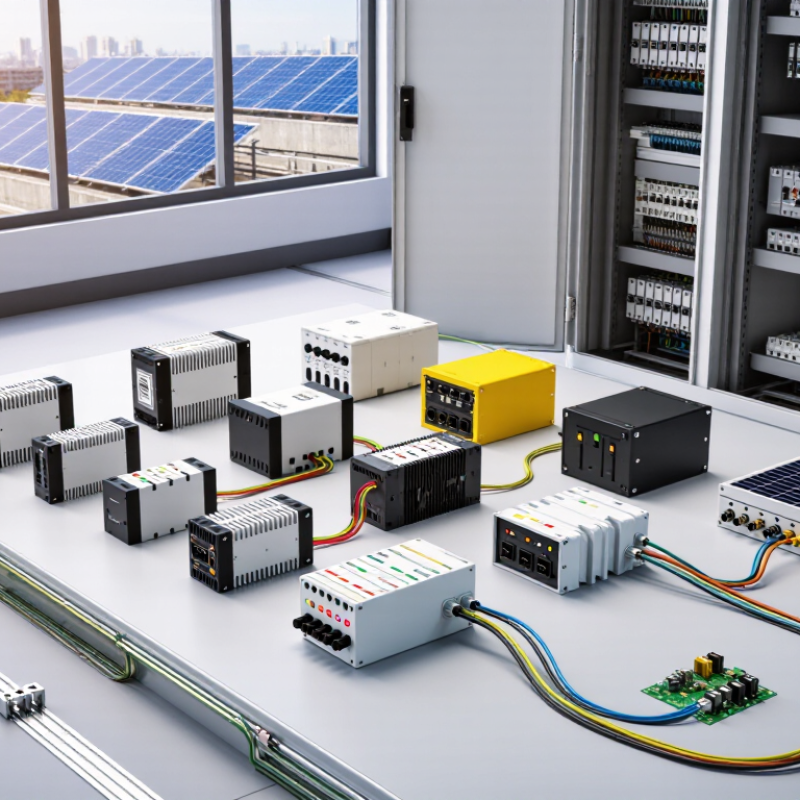
DC surge protection devices, or DC SPDs, protect equipment from short-lived voltage spikes. These spikes may enter through lightning, long cables, switching operations, or nearby electrical faults. A DC SPD normally connects in parallel with the protected circuit. During normal operation, it remains almost invisible electrically.
When voltage rises above its designed limit, an internal component changes behavior. A metal-oxide varistor can divert surge current toward earth or the return conductor. A transient-voltage suppressor can clamp the voltage very quickly. The SPD then reduces the stress reaching batteries, solar inverters, controllers, communication modules, or sensitive sensors. DC systems need careful design because direct current does not naturally cross zero. Arc interruption can be difficult.
A practical top-ten comparison should examine device types, not only product names. Useful categories include photovoltaic string SPDs, combiner-box SPDs, battery-system SPDs, control-panel SPDs, and data-line protectors. Check the maximum continuous operating voltage, voltage protection level, discharge current, response time, and short-circuit rating. Matching polarity matters. So does correct earthing.
Installation experience shows a common weakness: a powerful SPD can perform poorly with long connection wires. Keep conductors short, straight, and securely terminated. Add suitable backup protection when required by the system design. Inspect the status indicator after a severe storm. A green window is helpful, but it is not absolute proof of safety. Labels can fade, connections can loosen, and standards differ between applications. That deserves a second look.
What Are the Top 10 DC Surge Protection Devices?
How to Evaluate DC Surge Protection Devices
The best DC surge protection device depends on the circuit, not its appearance. For photovoltaic systems, compare Type 1, Type 2, and combined Type 1+2 designs. Battery storage, electric vehicle chargers, telecom cabinets, and industrial controls need different voltage ratings and discharge paths. The IEA PVPS Trends in Photovoltaic Applications 2024 report recorded about 456 GW of new solar capacity in 2023. More installations mean more exposure to lightning and switching surges.
Check the maximum continuous operating voltage first. It must exceed the system’s real maximum voltage, including cold-weather increases. Then review nominal discharge current, maximum discharge current, voltage protection level, short-circuit rating, and response time. IEC 61643-31 is a useful reference for photovoltaic SPDs. UL 1449 testing can also support safer product comparisons. A visible end-of-life indicator matters in dusty combiner boxes. Remote contacts help maintenance teams detect failure without opening energized equipment.
Installation quality changes the result. Keep connecting leads short, straight, and properly bonded. Coordinate the SPD with backup fuses and the system’s grounding arrangement. A powerful rating alone proves little. I have seen specifications look impressive while cable routing weakened protection. That detail is easy to miss. Evaluate thermal disconnection, enclosure protection, operating temperature, replacement access, and test documentation. Independent laboratory results deserve more trust than unexplained marketing claims.
| Rank | DC SPD Configuration | Typical Application | System Voltage | Typical UCPV / UC | Typical In at 8/20 μs | Typical Imax at 8/20 μs | Response Time | Common Standard Reference | Key Evaluation Point |
|---|---|---|---|---|---|---|---|---|---|
| 1 | Type 1+2 photovoltaic DC SPD | PV arrays with an external lightning protection system | 600 V DC | 600 V DC | 20 kA | 40 kA | ≤25 ns | IEC 61643-31 | Verify impulse-current capability, protective voltage, and coordination with upstream protection. |
| 2 | Type 2 photovoltaic DC SPD | Rooftop and ground-mounted PV systems without direct lightning-current exposure | 1,000 V DC | 1,000 V DC | 20 kA | 40 kA | ≤25 ns | IEC 61643-31 | Choose a PV-rated device with a maximum continuous operating voltage above the array's maximum open-circuit voltage. |
| 3 | Type 2 photovoltaic DC SPD | High-voltage commercial and utility-scale PV strings | 1,500 V DC | 1,500 V DC | 20 kA | 40 kA | ≤25 ns | IEC 61643-31 | Confirm creepage and clearance distances, short-circuit withstand rating, and compatibility with 1,500 V PV equipment. |
| 4 | Low-voltage battery DC SPD | 48 V battery storage, telecommunications, and control power systems | 48 V DC | 60 V DC | 10 kA | 20 kA | ≤25 ns | IEC 61643-41, where applicable | Check polarity, continuous current capability, leakage current, and the required backup fuse or circuit breaker. |
| 5 | Medium-voltage battery DC SPD | 110 V DC industrial battery banks and substation control systems | 110 V DC | 150 V DC | 10 kA | 20 kA | ≤25 ns | IEC 61643-41, where applicable | Allow for the battery's highest equalization voltage and verify insulation coordination. |
| 6 | High-voltage battery DC SPD | 220–240 V DC UPS, emergency power, and industrial energy storage systems | 220–240 V DC | 275 V DC | 10 kA | 20 kA | ≤25 ns | IEC 61643-41, where applicable | Compare the protective voltage with the DC bus insulation rating and confirm thermal-disconnector behavior. |
| 7 | DC electric-vehicle charging SPD | DC fast-charging equipment and charging stations | 800–1,000 V DC | 1,000 V DC | 20 kA | 40 kA | ≤25 ns | IEC 61643-31 or applicable DC equipment requirements | Check the charger manufacturer's insulation limits, short-circuit rating, and coordination with the AC-side SPD. |
| 8 | 24 V DC control-line SPD | PLC, instrumentation, sensors, and industrial automation panels | 24 V DC | 30–36 V DC | 5 kA | 10 kA | ≤1 ns | IEC 61643-41 or IEC 61643-21, depending on circuit type | Select a low-capacitance design when signal integrity, measurement accuracy, or high-speed communication is important. |
| 9 | 48 V DC telecommunications SPD | Base stations, network cabinets, remote radio units, and telecom power systems | 48–60 V DC | 75 V DC | 5 kA | 10 kA | ≤1 ns | IEC 61643-21 | Evaluate insertion loss, voltage protection level, grounding arrangement, and the equipment's maximum operating voltage. |
| 10 | Railway and traction DC SPD | Railway signaling, trackside equipment, and traction auxiliary circuits | 750 V DC | 900–1,000 V DC | 20 kA | 40 kA | ≤25 ns | IEC 61643-31 or applicable railway standards | Prioritize vibration resistance, environmental sealing, coordination with rail bonding, and verified DC arc behavior. |
Note: Ratings shown are representative values commonly used for selecting DC surge protection devices. The final selection must be verified against the installation's maximum continuous voltage, short-circuit current, earthing system, lightning-risk assessment, conductor length, ambient conditions, and applicable local standards.
The top 10 DC surge protection devices differ by circuit duty, energy level, and installation environment. Type 1 DC SPDs handle direct lightning-current risk. Type 2 devices protect against induced surges. Combined Type 1+2 units serve exposed systems requiring layered protection. Photovoltaic SPDs protect strings, combiner boxes, and inverter inputs. Battery-storage SPDs protect high-voltage battery racks and DC busbars. EV-charging SPDs protect charging cabinets and vehicle interfaces. Telecom DC SPDs support 24 V and 48 V communication systems. Industrial-control SPDs protect sensors, PLCs, and instrumentation. Railway DC SPDs suit traction and signaling networks. Data-center DC SPDs protect rectifiers, battery banks, and critical distribution panels.
Application conditions matter more than product labels. The IEA PVPS Trends 2024 report recorded more than 400 GW of new photovoltaic capacity worldwide in 2023, increasing demand for coordinated DC protection. A 2024 industry market report from MarketsandMarkets also projects sustained growth in surge protection equipment through 2029. That growth is credible, but installation quality remains decisive. IEC 61643-31 requires photovoltaic SPDs to address DC operating voltage, discharge current, and short-circuit behavior. UL 1449 provides another recognized framework for performance and safety evaluation. In field commissioning, I check maximum continuous voltage, backup protection, conductor length, and grounding layout. Small wiring errors can weaken a technically excellent device. I have seen this overlooked.
A credible top-ten comparison of DC surge protection devices should begin with voltage rating, not marketing language. The device’s maximum continuous operating voltage must exceed the circuit’s real maximum, including cold-weather photovoltaic voltage rise. Common DC systems use 600 V, 1,000 V, or 1,500 V ratings. IEC 61643-31:2018 provides the relevant testing framework for photovoltaic surge protective devices. IEA PVPS Trends 2024 reported approximately 456 GW of new solar capacity in 2023, making consistent DC protection increasingly important across large installations.
Response time deserves careful interpretation. Many devices advertise responses below 25 nanoseconds, but response time alone does not show how much voltage reaches sensitive equipment. A better comparison includes voltage protection level, discharge current, and impulse-current capacity. IEEE guidance, including IEEE C62.41.1, emphasizes evaluating surge environments rather than relying on one laboratory number.
A device with a lower protection level may outperform a faster device in practice.
The strongest candidates usually combine replaceable modules, visual status indicators, thermal disconnection, remote alarm contacts, and short-circuit backup coordination. For rooftop arrays, check polarity configuration, grounding design, enclosure rating, and installation distance from inverters. IEC 61643-31 testing also distinguishes different surge-current duties, so identical voltage ratings do not guarantee identical endurance.
I would question any top-ten ranking that ignores conductor length and earthing quality. Real wiring can quietly weaken excellent specifications.
(Sources: IEA PVPS Trends 2024; IEC 61643-31:2018; IEEE C62.41.1.)
Selecting a DC surge protection device starts with the system’s voltage, current, and grounding arrangement. For solar arrays, battery banks, control cabinets, and telecommunications equipment, the protector must match the circuit’s maximum continuous operating voltage. Check discharge capacity, response time, pole configuration, and protection modes. The ten most practical options usually serve photovoltaic strings, combiner boxes, battery storage, industrial controls, railway systems, data equipment, and outdoor DC enclosures. Certification to relevant standards also matters.
Installation demands careful attention. De-energize the circuit and verify it with a suitable meter. Mount the device close to the equipment it protects, using short, straight conductors. Long loops reduce performance. Connect protective earth with the lowest practical impedance, and tighten terminals to the manufacturer’s specified torque. In a solar cabinet, keep power and signal wiring separated. A poorly routed cable can weaken an otherwise excellent device.
Tips: Check the indicator window during every scheduled inspection. Replace the module after a severe surge, visible damage, overheating, or an indicator change. Record inspection dates and test results. Keep spare modules in a dry cabinet. Avoid mixing incompatible replacement parts. One field lesson is easy to overlook: an SPD cannot correct bad bonding or missing grounding. I have seen correctly rated protectors fail early because installation details were treated as secondary. Review the wiring diagram after installation, not only before it.
The chart compares commonly used maximum continuous operating voltage classes (UCPV) for DC surge protection devices in battery systems, control circuits, telecommunications, photovoltaic arrays, and industrial DC distribution. Select a device with a UCPV rating suitable for the system’s maximum operating voltage, and verify the required discharge current, protection level, grounding arrangement, and applicable IEC 61643-31 or IEC 61643-11 requirements before installation.
By continuing to browse or by clicking “Accept All Cookies,” you agree to the storing of first- and third-party cookies on your device to enhance site navigation, analyze site usage, and assist in our marketing efforts. View our Privacy and Cookie Policy.